
Bioregional Weaving Labs (BWLs) – the collective that is geographically grounded communities of action that organise people, place, and projects to regenerate bioregions is Integral City Weaving Lab of 2025.
Between 2025 and 2030, the BWL Collective positions its work as long‑arc, place‑based systems change: weaving ecological regeneration, social cohesion, cultural renewal, economic transformation, and inner and relational development into coherent, living systems.

HOW BIOREGIONAL WEAVING LABS EXPRESS THE INTEGRAL CITY INTELLIGENCES
At the heart of this work lies a clearly articulated BWL Theory of Change, expressed through six mutually reinforcing pathways: weaving community, building capacity, weaving portfolios of systemic innovations, activating changemakers, developing bioregional finance mechanisms, and influencing policy. Together, these pathways form the primary transformation architecture through which BWLs design, govern, and scale regenerative change in bioregions.
Seen through the Integral City (IC) lens, BWLs do not apply the intelligences as an external framework; they embody them through practice. The intelligences described below emerge through the deliberate activation of the six pathways and from how BWLs work with living systems, multi‑stakeholder governance, portfolios of systemic innovations, and awareness‑based leadership.
What follows is an updated articulation of how BWLs express the Integral City Intelligences today—reflecting the maturity of the BWL Collective and its 2025–2030 strategy.

CONTEXTING INTELLIGENCES
1. Ecosphere Intelligence
Deep attunement to the ecological realities of place.
BWLs are explicitly bioregional: they work at the scale of living systems rather than administrative boundaries. Each Lab grounds its strategy in the specific ecological, climatic, hydrological, and biodiversity conditions of its bioregion.
Across Europe, BWLs engage with:
- soil depletion and regeneration
- water scarcity, flooding, and watershed resilience
- biodiversity loss and habitat fragmentation
- climate adaptation and mitigation at landscape scale
Ecological challenges are not treated as external constraints but as organising principles for action. Bioregional realities shape priorities, partnerships, portfolios, and financing mechanisms.
IC resonance: BWLs express Ecosphere Intelligence by placing ecological limits, rhythms, and potential at the centre of decision‑making—designing systems with nature rather than for nature.
2. Emergent Intelligence
Seeing regions as living, adaptive systems.
BWLs work from the understanding that systemic change cannot be fully planned or controlled. Instead, they cultivate the conditions for emergence through:
- multi‑stakeholder sensemaking
- iterative learning cycles
- long‑term relational investment
- portfolio approaches rather than isolated projects
Outcomes are allowed to unfold over time, guided by shared purpose rather than fixed blueprints. New collaborations, governance forms, and economic models emerge from sustained collective practice.
IC resonance: Emergent Intelligence is visible in how BWLs convene long‑term journeys whose results cannot be predicted in advance, yet reliably generate new systemic capacities.
3. Integral Intelligence
Working simultaneously across inner, relational, structural, and systemic dimensions.
The BWL approach is inherently integrative and is operationalised through its Theory of Change and six pathways. These pathways ensure that inner development, relational coherence, structural innovation, and systemic transformation evolve together rather than in isolation.
In practice, this integration spans multiple dimensions of reality:
- Inner: awareness, mindset shifts, leadership development, and responsibility for one’s role in the system
- Relational: trust-building, shared meaning, collective identity, and cross-boundary collaboration
- Structural: governance models, financing mechanisms, institutional arrangements, and decision-making processes
- Systemic: portfolios of innovations addressing multiple leverage points across ecological, social, cultural, and economic systems
This integration is not conceptual but operational. Weaving Teams hold space for inner and relational work while simultaneously redesigning economic flows, governance arrangements, and policy interfaces.
IC reflection: BWLs operate across I / We / It / Its perspectives in a coherent way, enabling whole‑system transformation rather than fragmented interventions.
4. Living Intelligence
Honouring cycles of growth, decay, renewal, and regeneration.
BWLs work with time horizons of 10+ years and recognise that regeneration unfolds in phases. They support:
- ecological renewal of landscapes
- renewal of community agency and belonging
- renewal of local economies through regenerative models
The BWL framework itself is intentionally described as living: adaptive, evolving, and responsive to context.
IC resonance: Living Intelligence is expressed through respect for lifecycle dynamics—allowing systems, relationships, and initiatives to mature organically.
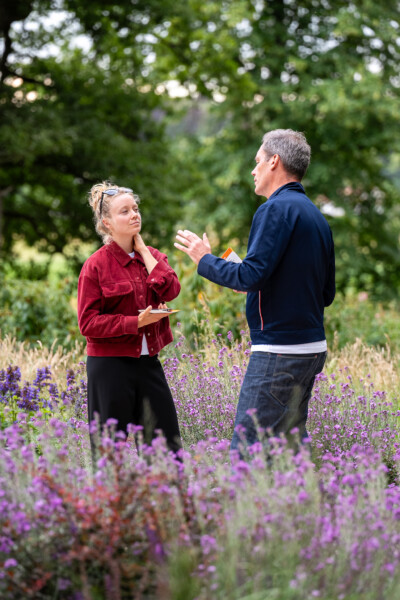
INDIVIDUAL INTELLIGENCES
5. Inner Intelligence
Cultivating reflective, aware, and purpose‑driven leadership.
BWLs invest explicitly in inner development through practices drawn from awareness‑based systems change. Weavers and systemic innovators are supported to:
- reflect deeply on their role in the system
- unlearn extractive patterns
- develop capacity to sense into complexity
- lead from purpose rather than reactivity
This inner work is seen as foundational—not optional—to effective systems change.
IC resonance: Inner Intelligence is cultivated as a prerequisite for regenerative leadership at scale.
6. Outer Intelligence
Translating awareness into embodied, practical action.
BWLs strengthen people’s ability to act by developing concrete skills, including:
- regenerative land‑use practices
- collaborative leadership and facilitation
- governance and stewardship models
- portfolio development and systems entrepreneurship
Participants are not only inspired; they are equipped to implement and sustain change in their bioregions.
IC resonance: Outer Intelligence shows up in the translation of values into behaviours, practices, and tangible outcomes.
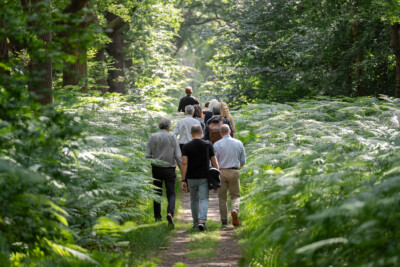
COLLECTIVE INTELLIGENCES
7. Social (Structural) Intelligence
Designing institutions and governance that match complexity.
BWLs actively co‑create and prototype new structural arrangements that enable regenerative systems change at bioregional scale. These structures are organised through the six pathways of the BWL Theory of Change, which provide a flexible yet coherent architecture for action.
This includes:
- Distributed and subsidiarity-based governance rooted in place
- Multi-stakeholder decision-making processes that reflect ecological and social interdependence
- Bioregional Financing Facilities with bottom-up governance and long-term horizons
- Portfolio-level coordination across sectors, initiatives, and forms of capital
Rather than imposing control, these structures are designed to serve life, enable learning, and support collective stewardship over time.
IC reflection: Social Intelligence is expressed through institutional architectures that enable coherence, resilience, and shared responsibility within living systems.
8. Cultural Intelligence
Cultivating shared meaning, trust, and belonging.
At the heart of BWLs lies cultural work:
- weaving relationships across difference
- developing shared narratives of place
- building cultures of care, reciprocity, and responsibility
- fostering a sense of belonging to bioregions
Storytelling, collective gatherings, and shared rituals are treated as strategic—not cosmetic—interventions.
IC resonance: Cultural Intelligence provides the fertile soil from which regenerative systems can grow.
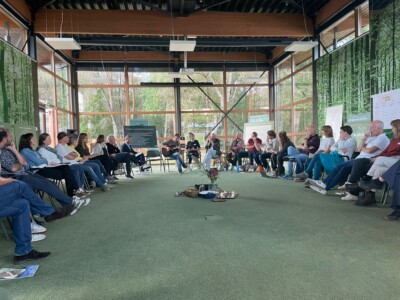
STRATEGIC INTELLIGENCES
9. Inquiry Intelligence
Asking regenerative questions rather than imposing solutions.
BWLs operate through deep inquiry:
- What does this bioregion need to thrive?
- Where are systemic barriers and leverage points?
- How can existing initiatives reinforce one another?
Inquiry informs portfolio design, financing strategies, and policy engagement.
IC resonance: Inquiry Intelligence enables root‑cause understanding and strategic clarity in complexity.
10. Meshworking Intelligence
Weaving across sectors, scales, and systems.
Meshworking is a defining strength of BWLs. They connect:
- farmers, fishers, and land stewards
- entrepreneurs and investors
- municipalities, regions, and EU‑level actors
- grassroots initiatives and institutional players
Hierarchies, networks, and circular economies are intentionally blended.
IC resonance: BWLs act as master meshworkers—aligning multiple operating systems into coherent ecosystems of action.
11. Navigating Intelligence
Learning, adapting, and course‑correcting over time.
BWLs balance vision with evidence by tracking:
- ecological indicators
- social and relational health
- economic flows and financial resilience
- inspiration, agency, and engagement
Learning loops are embedded through peer‑to‑peer exchange and pan‑European knowledge sharing.
IC resonance: Navigating Intelligence grounds ambition in continuous feedback and adaptive learning.
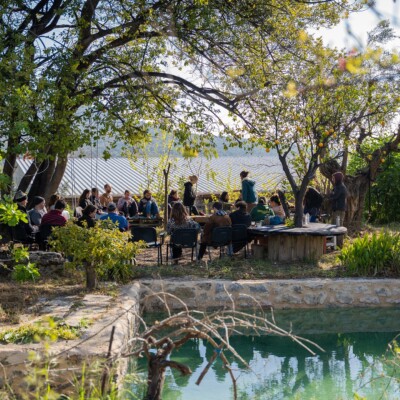
EVOLUTIONARY INTELLIGENCE
12. Evolutionary Intelligence
Acting from future potential rather than past patterns.
BWLs are explicitly future‑oriented. Their 2030 ambition includes:
- 100+ connected BWLs across Europe
- 10+ bioregional portfolios generating holistic returns
- multiple operational Bioregional Financing Facilities
- mobilisation of 1 million changemakers
They work from the belief that humanity can learn to partner with nature in shaping regenerative futures.
IC resonance: Evolutionary Intelligence is embodied in BWLs’ long‑term commitment to civilisational transformation through place‑based action.
CONCLUDING REFLECTION
Bioregional Weaving Labs exemplify the full spectrum of Integral City Intelligences—not as an overlay of concepts, but as lived, place‑based practice organised through a clear Theory of Change.
By activating six mutually reinforcing pathways, BWLs weave inner and relational development, cultural coherence, structural innovation, ecological regeneration, economic transformation, and policy influence into coherent bioregional systems. In doing so, they offer a mature, future‑fit model for regenerative cities and regions.
This work remains living and unfinished. Regeneration is not a project or a policy—it is an ongoing practice of organising life together in relationship with place, guided by learning, care, and responsibility for the futures we are shaping.
===
AWARD
It is an inspiration to learn how Integral City Intelligences are being woven across Gaia’s noosphere, especially through the explorations of Europe’s Bioregions with the City Weavers of Weaving Labs Collective.
Congratulations to Bioregional Weaving Labs Collective. We are proud to recognize you as the Integral City Weaving Lab of the Year 2025.
===
Learn about the prior Integral City of the Year Awards here:
Integral City Ecosystem of the Year 2024: Neighbourocracy, Children’s Parliaments, SONEC
Global Ecovillage Network of the Year 2023
Global City Collaboration – City Collaboration of the Year 2022
Urban Arena for Just & Sustainable Cities – City Region of the Year 2021
Edmonton – City of the Year 2020
Amsterdam – City of the Year 2019
6AIKA Finland – Cities of the Year 2018
Russia’s 3 City Associations – City of the Year 2017
===

Leave A Comment