
A healthy hive does not depend on heroes. It depends on stewards — and stewardship is Nature remembering how to care through us.
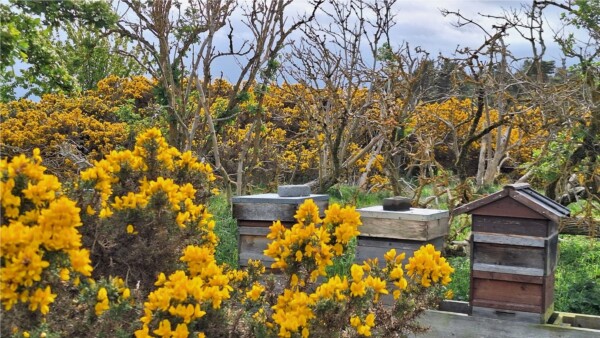
Stewarding Intelligences of the Human Hive
In the previous article, we explored the Functional Intelligences of the Human Hive. We noticed that every thriving community, organization, and city depends upon a diversity of functions working together in service of the whole.
But these patterns are not invented by humans.
They arise from Nature herself.
The honey bee hive does not hold a strategic planning retreat to decide how to organize itself. The forest does not convene a committee to assign roles to roots, fungi, insects, birds, rivers, and soil. Life has been patterning cooperation, exchange, renewal, adaptation, and regeneration for billions of years.
Human beings are not outside this patterning.
We are Nature.
We are in Nature.
We are one expression of the same living ecosystem that includes bees, flowers, soil, air, water, trees, microbes, animals, and stars. The intelligences we name in the Human Hive are not separate from Nature’s intelligence. They are Nature’s intelligence arising in us, through us, and between us. James Lovelock of the Gaia Hypothesis said that humans are Gaia’s Reflective Organ.
This matters deeply when we speak of stewardship.
If we imagine stewardship as something humans do to Nature, we remain trapped in separation. But if we understand stewardship as Nature working through humans to care for the conditions of life, then our whole orientation changes.
We are not managers of a world outside ourselves.
We are participants in a living system that is continually designing, adapting, and rebalancing itself.
From this perspective, the Stewarding Intelligences of the Human Hive are not roles we impose on life. They are patterns Nature has already seeded within us. We need to ask ourselves how our reflective capacities are amplified by the relationship connections that emerge from the Stewarding Intelligences?
If humans are Gaia’s Reflective Organ, then reflection is not an individual capacity alone. Reflection emerges through relationship. Carers help us feel what is happening. Curators help us remember what has happened. Choreographers help us perceive patterns that connect. Changemakers help us imagine what might become possible. Together they expand the capacity of communities, cities, and civilizations to sense themselves. Through these stewarding intelligences, Gaia’s awareness becomes collective rather than merely personal.
Carers express Nature’s impulse to nurture life. Like nurse bees tending larvae, like soil holding seed, like mycelium feeding trees, Carers attend to wellbeing, belonging, safety, and compassion. They remind us that care is not sentimental. Care is the first infrastructure of life.
Curators express Nature’s impulse to preserve memory. In tree rings, riverbeds, genetic codes, migratory pathways, songs, stories, and ceremonies, life remembers what has allowed it to survive and flourish. Curators tend this memory in human form. They preserve values, wisdom, culture, and continuity so that communities do not lose their soul.
Choreographers express Nature’s impulse to coordinate relationship. In a hive, a forest, a watershed, or a neighbourhood, life depends upon timing, exchange, and connection. Choreographers sense patterns and help many parts move together without forcing uniformity. They cultivate coherence without control.
Changemakers express Nature’s impulse to evolve. Life experiments. It mutates, adapts, explores, and responds to changing conditions. Scout bees search for new food sources. Pioneer plants prepare damaged ground. Changemakers carry this evolutionary restlessness in human systems, helping communities respond to what is emerging.
Together these Stewarding Intelligences reveal that leadership is not simply a human achievement. It is an ecological function.
- Carers nurture life.
- Curators preserve meaning.
- Choreographers cultivate coherence.
- Changemakers open possibility.
Each of these intelligences exists because Life needs them. Each carries a sacred assignment from the larger ecosystem. Each helps the Human Hive remember that we are not separate minds trying to control a world of objects, but living beings nested within Gaia’s living body, each expressing a fractal of her capacity to reflect upon herself.”
This recognition changes politics.
If humans are Nature, then politics is not merely a contest between human interests. It is part of the way the Earth reflects on and learns how to organize human energy in service of life.
The question is no longer, “Who has power over whom?”
The reflection becomes, “What is Life asking to be stewarded now?”
Perhaps our cities, communities, and democracies are being invited to grow up as ecological beings — to recognize that every decision affects the wider web of life, including the bees who pollinate so much of the food we depend upon.
The Human Hive is not a metaphor that separates us from bees.
It is a reminder of kinship.
The bees are not teaching us from outside our world. They are relatives in the same great field of intelligence. Their hive reveals patterns we too carry in our bodies, cultures, economies, and governance systems.
When we listen deeply, we begin to discover that stewardship is not about humans taking charge of Nature.
It is about Nature awakening to herself through human responsibility.
And perhaps that is one of the ways the soul of the city serves Gaia as her reflective organ.
This is an index for this Blog series.
From Survival to Soul: A Journey through the Intelligences of the Human Hive
-
From Survival to Soul: Discovering the Intelligences of Integral Politics
-
Functional Intelligences of the Human Hive: How Life Organizes Itself
-
Stewarding Intelligences: How Life Cares for Itself
-
Attuning Intelligences: How Gaia Listens Through Us
-
Collective Intelligence: How Gaia Learns Through Us
-
Agency Intelligence: How Gaia Chooses Through Us
-
Layers of Intelligence: Towards an Integral Politics of Coherence

Leave A Comment